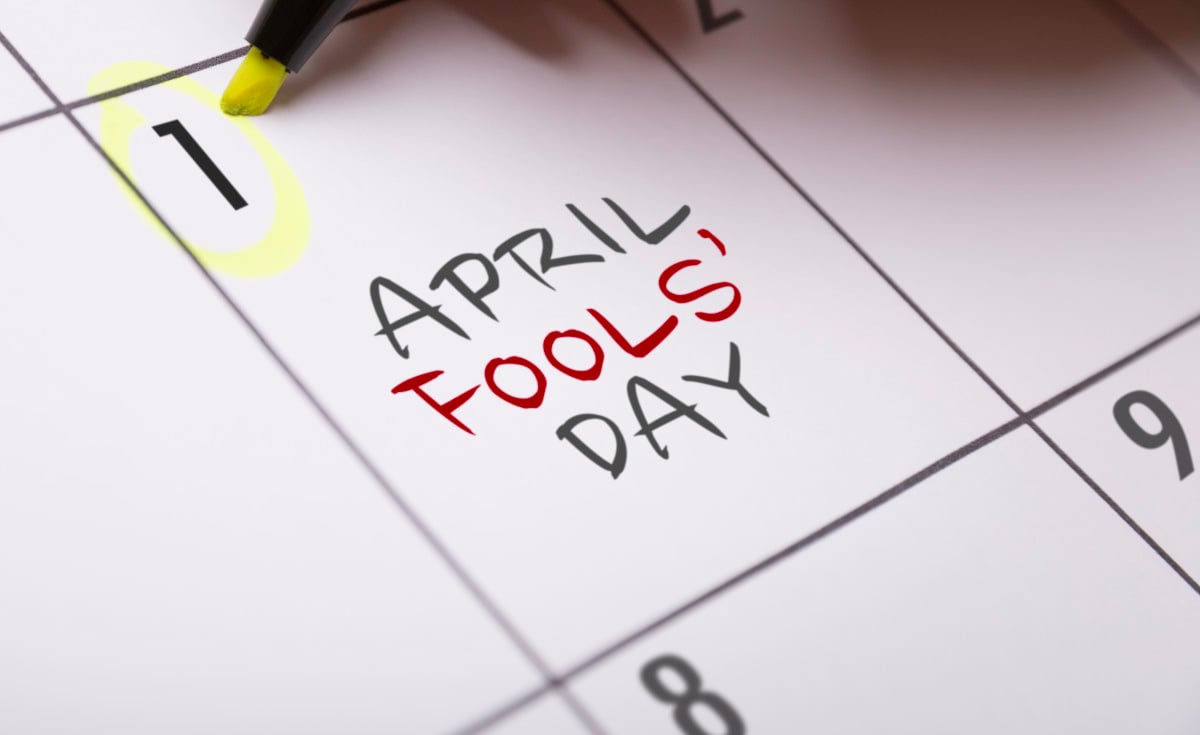
On April 1st, history recorded Britain's founding of the Royal Air Force in 1918, President Nixon's 1970 ban on TV and radio cigarette ads, and the 1999 arrest of Melissa email-virus creator David Smith. The date has also hosted 20+ documented April Fools' hoaxes over the past 70 years, from a 1957 BBC spaghetti-tree broadcast to a fake 2000 Google mind-reading search tool.
Year | Event | Category |
|---|---|---|
1918 | The Royal Air Force is founded in Great Britain | Military |
1970 | AMC introduces the Gremlin at a base price of $1,879 | Business |
1990 | Strangeways Prison riot begins in Manchester, England | Crime |
1999 | "Melissa" email virus creator David Smith is arrested in New Jersey | Technology |
2013 | Stockton, California becomes the largest U.S. city to file for bankruptcy | Finance |
Since You're Thinking About Dates and Timing...
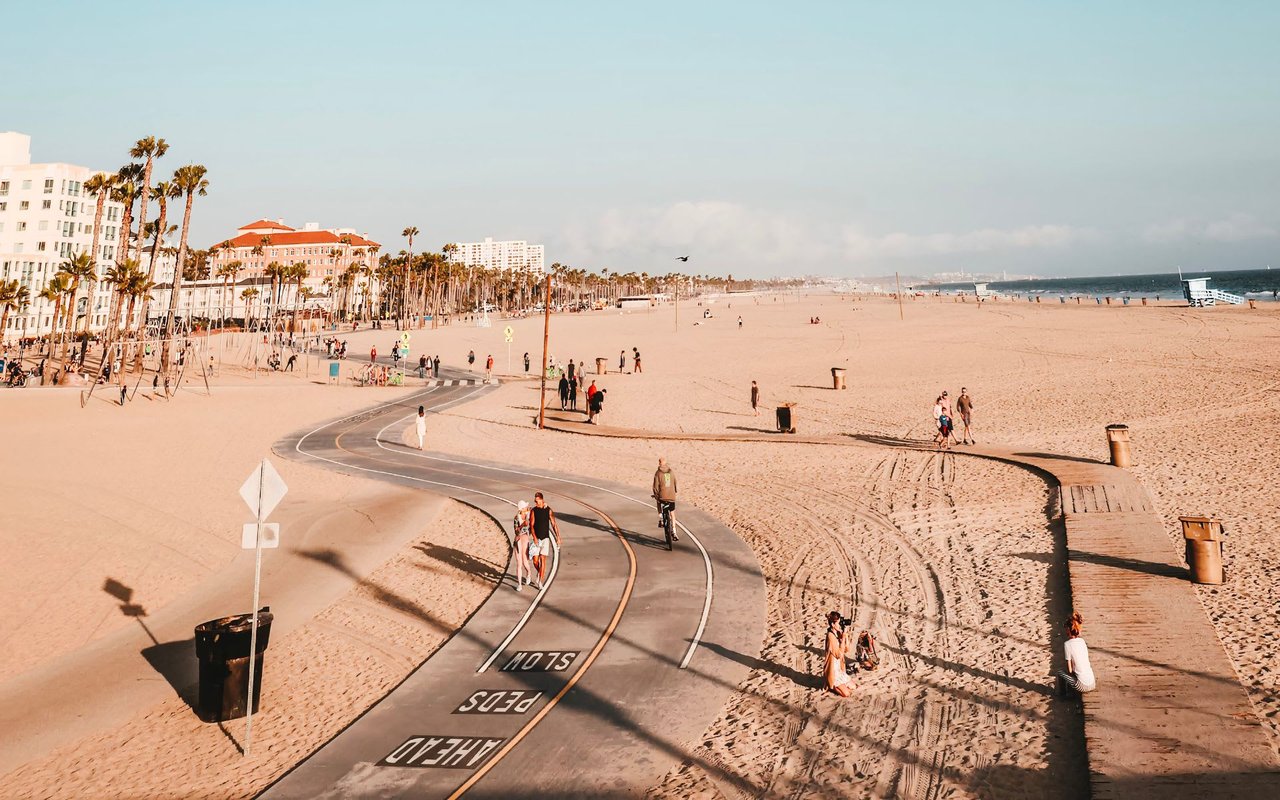
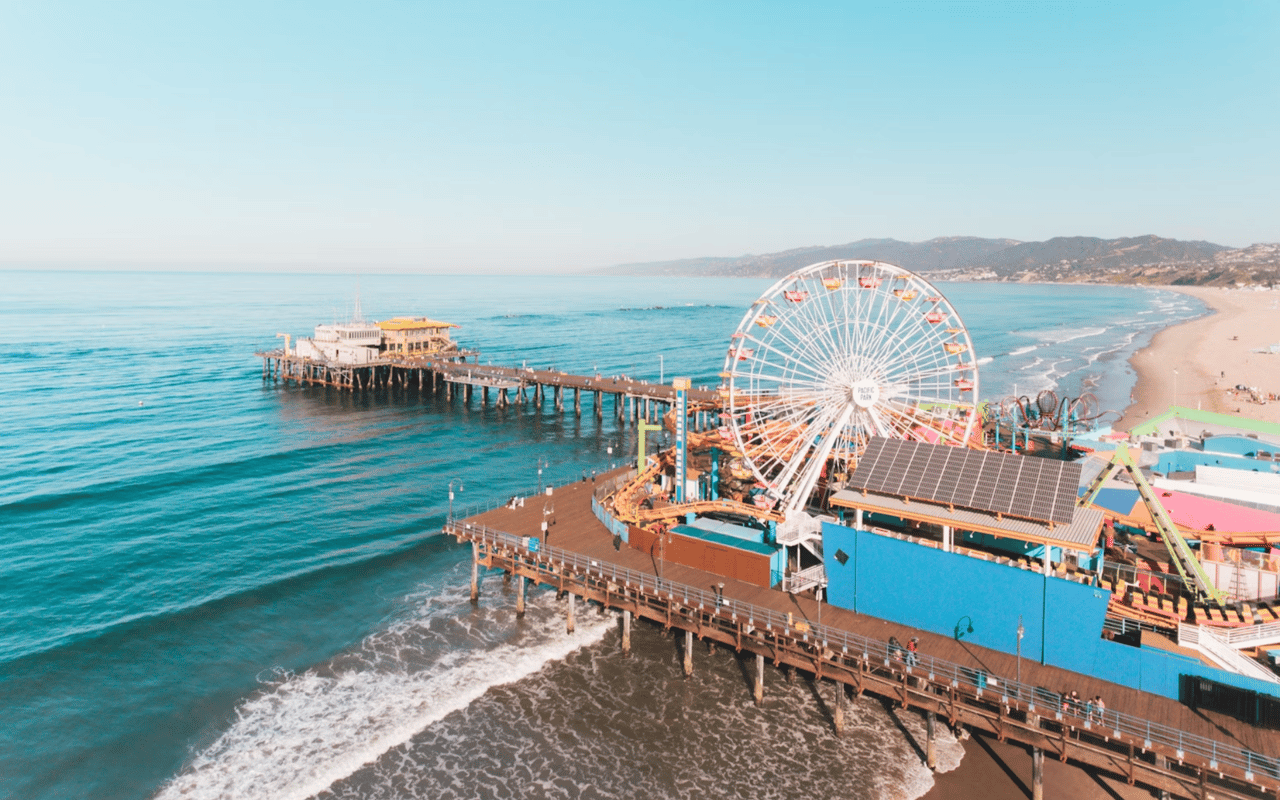
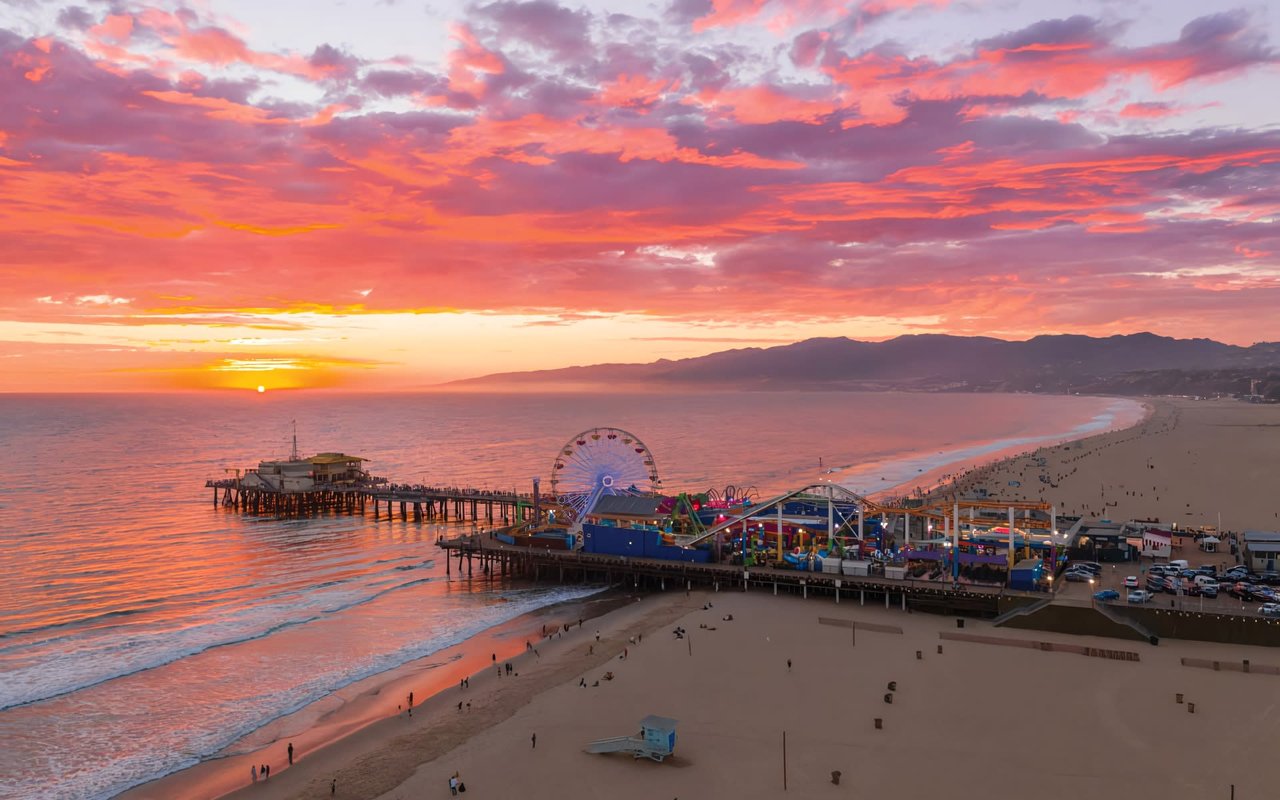
If you're weighing timing on a much bigger decision, like when to buy or sell in Santa Monica, that's a question with a real answer too. Are you actively looking at homes right now, or just starting to explore the market?
Historical Events on April 1st
1918: Royal Air Force Founded
The Royal Air Force was founded in England in 1918, an early milestone in military history: the first powered flight had taken place only 8 years earlier, by the Wright brothers, so nations forming dedicated air branches of their armed forces signaled how quickly aircraft had become central to military planning.
Aircraft in RAF service at its founding included the Sopwith Pup, Bristol F2B Fighter, Sopwith Camel, and Royal Aircraft Factory S.E.5.
1933: Nazi Germany Begins Persecution of Jews
Nazi Germany began the persecution of German Jews by declaring a boycott of Jewish-owned businesses.
1945: U.S. Forces Land on Okinawa
The United States Tenth Army, commanded by Lieutenant General Simon Bolivar Buckner Jr., landed on Okinawa, the main island of the Ryukyus, 362 miles from Japan's home islands.
Occupying Okinawa was considered essential to any invasion of mainland Japan. The U.S. Navy sustained greater casualties in this campaign than in any other battle of the war, and fighting continued until around June 21st, roughly 11 weeks later. The atomic bombings later changed the course of that strategy.
1946: Hawaii Earthquake and Tsunami
A magnitude 7.4 undersea earthquake in the North Pacific triggered a tsunami that reached Hawaii, roughly 2,400 miles away, in about 4.5 hours, traveling near 500 miles per hour. Waves up to 60 feet hit Hawaii's coast, killing more than 150 people. The disaster led to the creation of the U.S. Seismic Sea Wave Warning System.
1970: The AMC Gremlin Debuts
American Motors introduced one of the first American subcompact cars, the Gremlin, priced at $1,879, ahead of the fuel-price pressures that would soon reshape U.S. car buying. It competed with early imports like the Volkswagen Beetle and Japanese models such as the Datsun.
1970: Cigarette Advertising Banned From TV and Radio
President Nixon signed legislation banning cigarette advertising on television and radio.
1983: CND Peace Demonstrators Form Human Chain
Tens of thousands of CND peace demonstrators formed a human chain stretching 14 miles across southern England, from the American airbase at Greenham Common through the Aldermaston nuclear research center to the ordnance factory at Burghfield.
1990: Strangeways Prison Riot
About 1,000 prisoners rioted at Strangeways Prison in Manchester, setting fire to the chapel, gymnasium, and a number of cells in protest of overcrowded, primitive conditions. The riot lasted 25 days, the longest in British penal history.
1991: Iowa Allows Riverboat Gambling
Iowa became one of the first U.S. states to legalize riverboat gambling.
1999: Eleven EU Countries Adopt the Euro
Eleven European Union countries adopted the euro as a common currency, a milestone in the drive toward European monetary union.
1999: "Melissa" Email Virus Creator Arrested
David Smith was arrested and charged with creating the "Melissa" email virus, which infected an estimated 1 million computers worldwide and caused an estimated $80 million in cleanup and repair costs, according to the FBI. Melissa spread through Microsoft Word 97 and Word 2000 documents using an embedded macro, and could mass-mail itself through Microsoft Outlook 97 or 98.
1999: UK Introduces a National Minimum Wage
Britain introduced its first legally binding minimum wage. From that date, adults aged 22 and over had to be paid at least £3.60 an hour, and workers aged 18 to 21 had to be paid at least £3.00 an hour.
2000: Enigma Machine Stolen From Bletchley Park
An Enigma coding machine used by Germany to encrypt wartime messages was stolen from the Bletchley Park Museum in Buckinghamshire, southeast England. British mathematicians, scientists, and codebreakers at Bletchley Park had cracked the Enigma code during WWII, a cipher the Germans believed was unbreakable.
2001: Slobodan Milosevic Arrested
Former Yugoslav President Slobodan Milosevic was arrested and imprisoned on charges including corruption and theft of state funds, and was also wanted on war crimes charges by the International Criminal Tribunal for the former Yugoslavia.
2003: Jessica Lynch Rescued in Iraq
U.S. Army soldier Jessica Lynch was rescued from a hospital in Nasiriyah, Iraq, nine days after her unit was ambushed. Accounts of her captivity and rescue were widely debated in the years that followed; she was injured, captured by Iraqi forces, and rescued.
2006: UK's Serious Organised Crime Agency Launches
Britain's Serious Organised Crime Agency (SOCA), targeting drug smugglers, human traffickers, and fraudsters, came into force, combining resources from police, customs, and immigration services. It started with just over 4,000 officers.
2008: Hillary Clinton Compares Herself to Rocky in Philadelphia
Campaigning in Philadelphia ahead of the Pennsylvania primary, Hillary Clinton said, "When it comes to finishing a fight, Rocky and I have a lot in common. I never quit. I never give up." She went on to describe knowing "what it's like to stumble" but never staying down.
2009: USPS Announces Simpsons Stamps
The U.S. Postal Service announced first-class stamps featuring Homer, Marge, Maggie, Bart, and Lisa Simpson, available starting April 9th.
2009: Albania and Croatia Join NATO
NATO expanded to 28 member states with the addition of Albania and Croatia, continuing its growth following the collapse of the Soviet Union and the end of the Balkan conflict.
2012: Aung San Suu Kyi Wins Burmese By-Election
Aung San Suu Kyi, leader of Burma's National League for Democracy, won a parliamentary by-election, the party's first chance to compete in an election since 1990. She had spent nearly two decades under house arrest after the military took control following the 1990 election.
2013: City of Stockton Declares Bankruptcy
The city of Stockton, California, with a population of 290,000, filed for bankruptcy, and a federal judge approved the filing after a three-day trial, making it the largest U.S. city at the time to enter bankruptcy protection.
2014: Japan Raises Its Sales Tax
Japan raised its sales tax for the first time in 17 years, from 5 percent to 8 percent, with a further increase to 10 percent planned for October 2015, as part of an effort to manage public debt.
Famous April Fools' Jokes Through History
1957, UK: The BBC Spaghetti Harvest
The BBC aired a hoax Panorama segment about spaghetti crops in Switzerland, showing women plucking strands of spaghetti from trees to dry in the sun. Spaghetti was not widely eaten in the UK at the time and was seen by many as an exotic delicacy.
1965, UK: BBC "Smell-O-Vision"
BBC Radio claimed to trial "Smell-O-Vision," technology that could transmit smell over the airwaves. Several viewers reported the trial had worked.
1976, UK: The Floating Sensation
Astronomer Sir Patrick Moore told BBC Radio listeners that a rare planetary alignment would make people lighter at exactly 9:47 a.m. Dozens of listeners called in to say they'd felt it.
1977, UK: The Island of San Serriffe
The Guardian printed a supplement celebrating the 10th anniversary of the fictional island nation San Serriffe, complete with a capital city and a leader. ("San Serriffe" is a play on the typeface term "sans serif.")
1978, Australia: The Sydney Iceberg
A barge towed what appeared to be a giant iceberg into Sydney Harbor. Businessman Dick Smith had promoted a scheme to tow an iceberg from Antarctica and sell it as ice cubes; rain later revealed the "iceberg" was really fire-fighting foam and shaving cream over white plastic sheeting.
1980, UK: Big Ben Goes Digital
BBC Radio announced Big Ben would be replaced with a digital clock, prompting angry calls from listeners.
1982, Hong Kong: Powdered Water
The South China Morning Post reported that packets of powdered water from China would solve Hong Kong's water shortage, with one pint said to expand into ten pints of drinkable water.
1985, USA: The 168-MPH Pitcher
Sports Illustrated profiled a fictional Mets prospect, Sidd Finch, said to throw a 168-mph fastball learned in a Buddhist monastery. (The fastest fastball ever officially recorded is Aroldis Chapman's 105.8-mph pitch in 2010.)
1989, UK: The UFO in London
Richard Branson landed a UFO-shaped hot-air balloon in a field outside London; local residents called police to report an alien landing.
1992, USA: Nixon's "Comeback"
NPR's Talk of the Nation announced that Richard Nixon was running for president again, with the slogan "I didn't do anything wrong, and I won't do it again."
1995, USA: The Hotheaded Naked Ice Borer
Discover Magazine ran a hoax article about an animal that melted through ice with its head to hunt prey, credited to a fictional researcher named "Aprile Pazzo" ("April Fool" in Italian). It generated more mail than any article in the magazine's history.
1996, USA: The Taco Liberty Bell
Taco Bell took out a full-page New York Times ad claiming it had purchased the Liberty Bell and renamed it the "Taco Liberty Bell" to help pay down the national debt.
1996, Canada: The Two-Dollar Coin Hoax
Toronto radio station Chez FM told listeners the two-dollar note would stop being honored after April 1, 1996, prompting concerned calls to banks and the Royal Canadian Mint.
1997, Worldwide: The Internet Cleaning
A chain email claimed the internet would shut down for 24 hours, from March 31 to April 2, for maintenance to clear out "electronic flotsam and jetsam."
1998, USA: The Left-Handed Whopper
Burger King ran a USA Today ad for a "Left-Handed Whopper" with condiments redesigned to drip from the right side.
2000, USA: Google's MentalPlex
Google announced "MentalPlex," a fictional technology claiming to read users' minds to generate search results without typing.
2004, UK: Germany Joins the Pound
BBC Radio's Jeremy Vine Show reported that Germany had left the euro and was negotiating to adopt the British pound instead.
2005, Australia: The Blue Brisbane River
A Brisbane radio station claimed a rare lunar effect had turned the Brisbane River bright blue.
2006, USA: The Stolen Locomotive
A Cheyenne radio station reported that a 550-ton Union Pacific "Big Boy" steam locomotive had been stolen from Holliday Park, despite having no connecting tracks. Some listeners went to investigate anyway.
Born on April 1st
Susan Boyle
Born April 1, 1961, in Blackburn, West Lothian, Scotland. Susan Boyle rose to international attention after her performance on Britain's Got Talent revealed a powerful singing voice that surprised audiences who judged her on looks alone. Her debut album, I Dreamed a Dream, released November 23, 2009, became one of Amazon's best-selling pre-sale albums. She has continued to live in her family home with her cat, Pebbles, despite worldwide media attention that included appearances on The Early Show, Good Morning America, Today, America's Newsroom, and The Oprah Winfrey Show.
Frequently Asked Questions
What major event happened on April 1, 1918?
On April 1, 1918, the Royal Air Force was founded in Great Britain, becoming one of the world's first independent air forces, formed just 8 years after the Wright brothers' first powered flight.
Why is April 1st known for hoaxes and pranks?
April Fools' Day pranks date back centuries, and major outlets have joined in for decades, from the BBC's 1957 "spaghetti harvest" broadcast to Google's 2000 "MentalPlex" mind-reading search announcement.
What happened with the "Melissa" computer virus?
The Melissa email virus, released in March 1999, infected an estimated 1 million computers worldwide and caused an estimated $80 million in damage before its creator, David Smith, was arrested on April 1, 1999.